

About
Located in the municipality of San Miguel, Bulacan, Biak-na-Bato National Park is one of the most historically significant and naturally beautiful destinations in Central Luzon. Spanning over 2,100 hectares of protected land, the park is famous for its network of caves, rivers, waterfalls, and limestone formations.
Its name translates to "split of the boulder" in English. This was the headquarters of the Katipunan during the Philippine Revolution in 1897, where Emilio Aguinaldo and fellow revolutionaries established the Republic of Biak-na-Bato. By the way, it was declared a national park in 1937 by the former president Manuel L. Quezon. Today, it stands as both a historical landmark and a natural paradise for eco-adventurers.
How to Book Activities
Discover and book unforgettable tours and activities in Bulacan and beyond. Secure your spot easily and enjoy hassle-free reservations through Klook:

How to Get Here
- From Manila, take a bus bound for Cabanatuan or San Miguel, Bulacan via Five Star, Baliwag Transit, or Genesis Bus. Travel time takes around 2.5 to 3 hours.
- From the San Miguel town proper, hire a tricycle to Biak-na-Bato National Park (around 6 km). Tricycles can wait or pick you up after your exploration.
- For private vehicles, take the NLEX–San Miguel exit and follow Waze or Google Maps toward the park entrance.
Travel by Bus
Skip the long lines and secure the best travel deals instantly — book your bus ticket here powered by 12Go — the fastest, hassle-free platform for comparing routes, schedules, and prices in one place.
Where to Book Your Flight
If you are outside Luzon, Trip.com can give you huge discount if you book your flight to Clark International Airport. Check the rates and book your flight here. At the airport terminal, ride a bus to Dau Terminal. Then, look for a bus that will pass Bulacan area. If no option, you can go to Trinoma or Cubao and ride another bus bound for Bulacan.
Discover amazing travel deals with Trip.com! By signing up using my referral link, you'll get up to $68 off flights, hotels, and more — and I'll earn rewards too. It's a win-win! Sign up here .
What to Expect
Visitors to Biak-na-Bato National Park can expect a refreshing blend of nature, history, and adventure. The park is dotted with caves that once served as hideouts for Filipino revolutionaries, as well as rivers perfect for swimming and bamboo rafting.
Local guides are available at the entrance and are required for most cave tours. Paths can be slippery, so wear proper footwear. There are also picnic areas, viewing decks, and a small museum showcasing artifacts and the story of the Biak-na-Bato Republic.
Some concrete pathways and bridges serve as the connection to certain parts of the park, crossing the Balaong and Madlum rivers. The local government built a river wall to protect the area from soil erosion. The trail going to each highlight is simple, and the terrain is surrounded by green. In this park, three caves can be found. These caves were used by the Katipuneros during the Spanish Colonial period, led by Emilio Aguinaldo.
Things to Do in Biak-na-Bato National Park
- Explore the Gen. Aguinaldo Cave and Bat Cave.
- Swim or take a bamboo raft ride in the Madalang River.
- Visit the Panicuason and Tanggapan Caves for historical exploration.
- Enjoy picnicking under shady trees and riverside huts.
- Trek to the Balong Cave and admire limestone formations.
- Drop by the Biak-na-Bato Shrine and Museum to learn about the 1897 revolution.
What to See
Bahay Paniki Cave

Bahay Paniki Cave (House of Bats) is located 300 meters south of the Aguinaldo Cave. Its location is not easy to penetrate due to some sharp and slippery stones. Since the area is composed of plants, it serves as the home of some poisonous snakes, scorpions, and insects. It is said to be the home of at least six species of winged mammals like: kabag-kabag, ngusong kabayo, bungisngis, sibsib, bayakan and pakibu. Inside the cave is an open space that stretches 30 meters up, forming a colorful, gorgeous, and spacious dome. The boulders are really huge, I think it's like a 2-story building tall. Then, beside the cave is the flowing water coming from the spring.
Aguinaldo Cave

The Aguinaldo Cave is the most notable among the other caves of Biak na Bato National Shrine. It is the cave where Gen. Emilio Aguinaldo once took refuge while leading the resistance movement against the Spanish and American colonizers. It is believed that this cave was the La Mesa de Aguinaldo, the table at which Aguinaldo signed the historic Peace Treaty.
Ambush Cave or Yungib 1
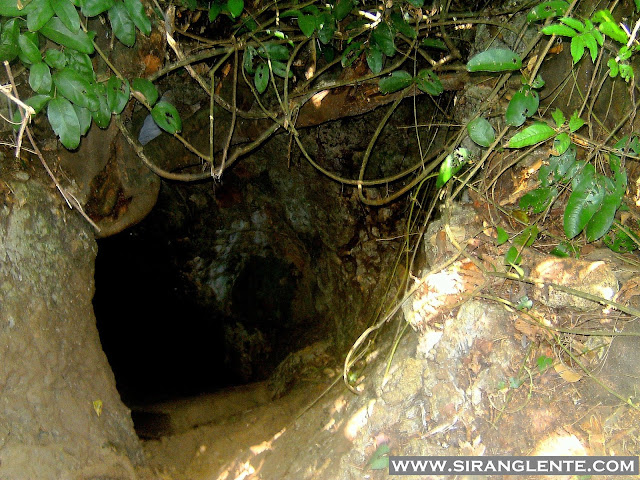
The Ambush Cave or Yungib 1 has a narrow and long cavern inside. There were several battles that happened in this cave; this was the place where the Katipuneros brought the Spaniards and killed them. But instead of killing the Spanish soldier, the Katipuneros killed the other Katipuneros and the Spaniards killed the Spaniards because the place was really dark and they didn't recognize that they were killing their own group members.
Hospital Cave or Yungib 2

The Hospital Cave or Yungib 2 served as the hospital for the Katipuneros. This was the dwelling of those people who got shot or ill during the battle against the Spaniards. Together with my two guides, we had a short prayer (in Portuguese or Latin) in the form of a Pasyon (a native song) for those people who sacrificed their lives just for our Freedom against the Spaniards.
Imbakan Cave or the Yungib 3

The Imbakan Cave or the Yungib 3 played a big role during the fight against the Spaniards. This was the place where the Katipuneros (Filipino Revolutionaries) stored their food, medicines, bullets, ammunition, and other things that they were using during the fight.
Tanggapan Cave

The Tanggapan Cave served as the office and the recruitment area of the Katipuneros, including Gen. Emilio Aguinaldo, for their new members. This is also the place where the new recruits were being oriented about the plans to fight against the Spaniards.
Travel Tips
- Hire a local guide — it’s required and helps the local community.
- Wear proper footwear and bring extra clothes for swimming.
- Bring your own food and water; stores are limited inside the park.
- Be cautious in caves — some passages are narrow and slippery.
- Visit early to avoid the crowd and the afternoon heat.
Entrance Fees
- Adults: 50 Pesos per person
- Students: 40 Pesos per person
- Senior Citizens, PWD, and Children below 7 years old: 40 Pesos per person
- Foreigners: 100 Pesos per person
- Guide Fee: 300 Pesos and it's 1 Guide for 5 tourists
Where to Stay Nearby
Meaco Royal Hotel
Meaco Royal Hotel offers modern rooms with essential amenities. Its central location makes it convenient for business travelers and tourists exploring Malolos. Book Meaco Royal Hotel here and get a discounted price of 1,221 pesos per night.
Unlock travel deals with Klook! Get a ₱250 promo code instantly when you sign up using my referral link: Sign up here .
Homey Nook
Homey Nook provides a cozy, homelike atmosphere with budget-friendly rates. It’s ideal for guests seeking comfort and simplicity during their stay. Book Homey Nook here for as low as 1,183 pesos per night.
Yes Hotel
Yes Hotel features clean, spacious rooms and friendly service. Its accessibility to local attractions makes it a reliable choice for short or extended visits. Book Yes Hotel here while the price is 1,075 pesos per night.
Chyns Suite
Chyns Suite offers boutique-style accommodations with a touch of elegance. Guests enjoy personalized service and a relaxing environment perfect for leisure stays. Book Chyns Suite here and get a discounted price of 1,505 pesos per night.
DRS Residences
DRS Residences provide affordable lodging with convenient access to transport hubs. It’s a practical option for budget-conscious travelers exploring Bulacan. Book DRS Residences here and get a promo price of 924 pesos per night.
Please note that rates are subject to change without prior notice. Always confirm prices directly with the booking platform or hotel.
Airbnb
Ready to earn from your space? Sign up as a host through my referral link and start welcoming guests worldwide. Airbnb provides tools, support, and secure payouts to help you succeed. If you're done signing up, message me so I can add your property in this list.
Klook.comSummary
Biak-na-Bato National Park is more than just a natural wonder — it’s a living monument to the courage and resilience of Filipinos. Whether you’re tracing the footsteps of heroes, exploring hidden caves, or simply enjoying the cool river breeze, the park offers a mix of history and adventure that few destinations can match. A trip here reminds us not only of the country’s revolutionary past but also of its timeless natural beauty waiting to be rediscovered.
Looking for travel ideas across the country? Read my complete guide to visiting all provinces in the Philippines — based on my actual travels.
No comments:
Post a Comment
Enter Comment Below: