
About Intramuros
Intramuros, the historic “Walled City” of Manila, stands as a living reminder of the Philippines’ Spanish colonial past. Built in the late 1500s, this fortified district once served as the political, religious, and educational center of Spanish Manila. Today, its cobblestone streets, stone walls, and centuries-old churches transport visitors back in time, offering a captivating blend of history, culture, and architecture. A stroll through Intramuros feels like stepping into a different era—where every corner tells a story of resilience and heritage.
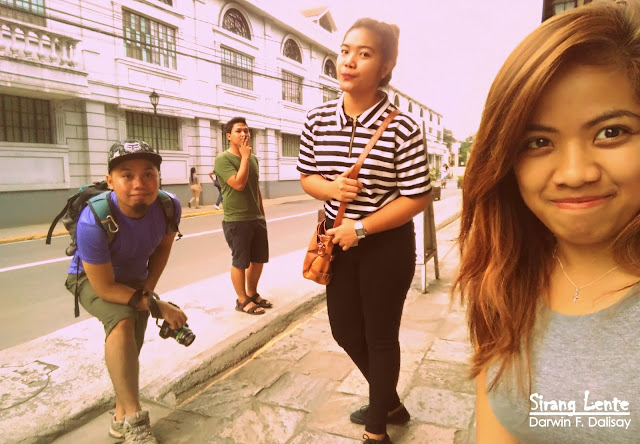
I visited Intramuros and Binondo several times, but I am missing something in and outside this walled city. Inspired by the question: “Hanggang saan aabot ang isang daang piso mo?” Our journey today shows that budget is not a problem to seeing the gorgeous artifacts erected centuries ago. Without a formal itinerary, we walked on the streets of Intramuros, Manila.
Destinations Near the Walls:
1. Quiapo Church
 |
| Quiapo Church |
Brief History: The first structure of Quiapo Church was made of bamboo and nipa palm and was built by the Franciscan Missionaries. But in 1574, the pirates destroyed and burned the church. In 1588, Fr. Antonio de Nombella, a Franciscan friar, founded this church and declared it the Parish of St. John the Baptist. It was again burned in 1603. In 1686, construction began in full, initiated by Gov. Gen. Santiago de Vera.
By the way, our meeting place was in Jollibee beside the Quiapo Church. While waiting for Marcus and Jamm, Shea and I stayed at the fast-food, facing the left side of the church's gorgeous facade. I have been seeing this structure on TV and online, and its intricate designs never fail to amuse me. The curves, lines, circles, and details on the walls and columns of this church are wonderful. This church houses the Black Nazarene.
When the two arrived, we stayed there for less than 30 minutes. Kain lang. To reach our next destination, we walked on the street adjacent to Quiapo Church. This street stretches to Carriedo, where our next destination is located. This street is busy because shops and vendors line all sides. We were walking on the road for fifteen minutes when we noticed the stunning color of Sta. Cruz Church from afar. When I entered the church, I knew I was stepping onto a floor of pure marble; the chandeliers on the ceiling, the golden-brown altar, and the details on the walls and columns were very noticeable against the white interior. We stayed by the fountain in front of Sta. Cruz Church for thirty minutes before we proceeded to our next stop.
2. Sta. Cruz Church
 |
| Sta. Cruz Church |
Sta. Cruz Church was constructed by members of the “Society of Jesus,” also known as the Jesuits, from 1608 to 1768. It is the first Roman Catholic Church built in this area. Its structure is composed of adobe blocks quarried from nearby provinces. It was dedicated to the newly converted Chinese who live in Manila.
By the fountain, we rode a jeepney with the Lawton signboard to our next destination. Habang nasa byahe, right after crossing the bridge near Carriedo, I noticed a prominent structure approaching us – it was the Post Office Building. Kaya bumaba nalang muna kami kahit Intramuros at Binondo destination namin.
3. Manila Central Post Office Building
 |
| Manila Post Office Building |
The Manila Central Post Office Building, located along the Pasig River in Liwasang Bonifacio, is one of the most iconic neoclassical landmarks in the Philippines. Designed by architect Juan Arellano and completed in 1926, it once served as the heart of the country’s postal services. With its grand columns and elegant symmetry, the building stands as a testament to Manila’s architectural heritage and resilience through history.
We stayed there for eight minutes and then proceeded to the Binondo District. Lakad lang, tawi ng tulay lakad papunta sa Manila Chinatown arch.
Manila Chinatown
 |
| Manila Chinatown |
The Manila Chinatown, also known as Binondo, is the oldest in the world, established in 1594. Located just across the Pasig River from Intramuros, it has long been a vibrant hub of trade, culture, and cuisine. Today, Binondo blends centuries-old heritage with modern Filipino Chinese life—its bustling streets lined with temples, restaurants, and shops offering a rich taste of Manila’s multicultural history.
At first, we were hesitant about going to Binondo because it was already past four in the afternoon, and the weather was not good. We were arguing in the middle of Quintin Paredes Road; since Shea won, we immediately crossed the road, then turned right, crossed the bridge along Quintin Paredes, and took photos by the arch of Binondo (photo above). May Chinatown ambiance na sa arch palang, kaya medyo na excite kami. Papaano, foods ang hinahanap.
5. Binondo Church
 |
| Binondo Church |
Binondo Church, officially known as the Minor Basilica of St. Lorenzo Ruiz, is one of the oldest churches in the Philippines, founded by Dominican priests in 1596. Located at the heart of Manila’s Chinatown, the church stands as a symbol of faith and cultural fusion, blending Spanish, Chinese, and Filipino influences. It is also the birthplace of St. Lorenzo Ruiz, the first Filipino saint, making it a significant religious and historical landmark.
Time check: four thirty in the afternoon. We were in front of Binondo Church, taking gorgeous shots while the sun was giving us good weather. It’s my second time entering this church, and there are no changes to its interior; the church of Binondo has an amazing, artistic interior. Its altar has a replica of St. Peter's Basilica in Rome. Several paintings of the Holy Family can be seen on the ceiling and walls. The curves, lines, and circles are present on every side of the church. Outside, in the front area, there’s a park with a fountain that adds to the area's ambiance. For our next destination, we rode in a jeepney with a Lawton signboard.
Attractions Inside the Walls:
From Binondo to Intramuros is less than ten minutes travel. Alighted by the entrance near PLM and took photos again with the old walls in the background. It is my third time walking by the walls of Intramuros, but I am still amazed by its appearance. I have been touching old walls and structures in different parts of the country, but Intramuros gives me a distinct feeling.

1. Silahis Arts and Artifacts
Unang pumukaw sa attention namin was the Silahis Arts and Artifacts. Within Intramuros are the old-looking structures and buildings, including this shop called Silahis. As what Shea said: “Alam mo parang ikaw yan?” pointing to the shop. I replied: “Bakit naman?” thinking that it was because I looked old. But she replied laughing: “Kasi Silahis...” and there, number one tuloy sya sa mga lines that day.
2. San Agustin Church
 |
| San Agustin Church |
We continued walking on the streets allotted for pedestrians to the oldest church in the Philippines – the San Agustin Church. There’s a creepy feeling when I stepped on the floor of San Agustin Church because I saw tombstones in most parts. Each of the lapidas has a name, dating back centuries. The chandeliers, lights, paintings, walls, and columns made its interior look elegant. A gigantic bell at the back also draws the visitors' eyes. it was already sunset, so we hurriedly walked to Manila Cathedral, just fifteen minutes from San Agustin.
San Agustin Church, considered the oldest church in the Philippines, is recognized by the NCCA and UNESCO as a historical landmark. The very first structure of San Agustin Church was built in 1571 and was made of nipa and bamboo, but was destroyed by fire during the invasion of Limahong, a Chinese pirate, in 1574. In the same spot, a new structure was built of wood. In 1586, a new structure made of adobe stone was constructed, led by the Augustinians
3. Manila Cathedral
 |
| Manila Cathedral |
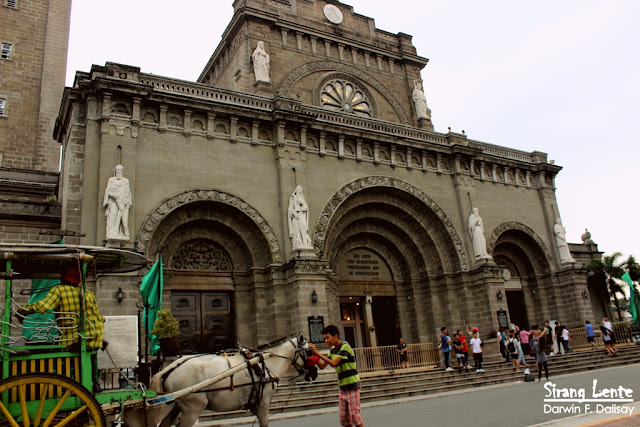
Manila Cathedral also faced various obstacles; the first structure was made of nipa, wood, and bamboo and was damaged and destroyed several times by fire. Later in 1592, it was reconstructed using stone. In the same location, in 1614, a third structure was built but was again destroyed by an earthquake.
The last time I visited this church, it was still under renovation. After its renovation, Manila Cathedral was made even more beautiful. Its façade has gorgeous artwork with huge white statues. Its interior is darker, but the details are stunning, and I felt the cooler ambiance. Outside, calesas can be hired to take you to various tourist spots within Intramuros.

At Manila Cathedral, we also met Jira and had our merienda (slash) dinner at her house, by the port area, just a walking distance from the Manila Cathedral. There were soda and spaghetti garnished with “happiness.” On behalf of Team Sirang Lente, we would like to thank you, Jira, and Joner for your accommodation. ‘TIL NEXT TIME!
Summary
Intramuros is more than just an old city—it’s the soul of Manila, echoing the country’s journey from colonial rule to independence. Whether you’re exploring Fort Santiago, admiring the artistry of San Agustin Church, or simply walking along its ancient walls, Intramuros offers a timeless experience that connects the past with the present. It remains a must-visit for anyone seeking to understand the rich tapestry of Philippine history and identity.
As someone who has visited all provinces in the Philippines, I’ve created a complete guide to help you explore each one. Check out my Philippines Provinces Travel Guide here.
Related Posts
✈️ Earn While You Travel!
Join Travelpayouts today and start earning from flights, hotels, and travel services worldwide. Whether you’re a blogger, influencer, or simply love sharing travel deals, this is your chance to turn passion into profit.
🚀 Start Earning NowFree to join • Easy to use • Trusted by thousands of travel creators

No comments:
Post a Comment
Enter Comment Below: